

MOST INCLUSIVE DESIGN
MOST INCLUSIVE DESIGN
MOST INCLUSIVE DESIGN
PAN.TRY
PAN.TRY
PAN.TRY
Bridging efficiency & nutrition by making home-cooked accessible and optimizing food budgets
Bridging efficiency & nutrition by making home-cooked accessible and optimizing food budgets

ROLE
UI/UX Designer
TEAM
3 UI/UX designers
TIMELINE
3 days
SKILLS
Prototyping
Usability Testing
User Testing
Information Architecture
TOOLS
Figma
Adobe Illustrator
OVERVIEW
What began as a design challenge for the 2024 Rice Design-a-thon to create a product that solves an issue for college students has since become our team’s passion project for addressing food insecurity in college students & beyond. After receiving “Most Inclusive Design” out of 50+ other teams, our team has since taken Pan.try from our design prototype to an MVP to pitching it at the Napier Rice Launch Challenge.
Pan.try is a mobile app that began with the goal to make nutrition & cooking more accessible to college students amidst busy schedules and tight budgets. In just 3 days, my team and I designed an AI-powered scanner and virtual pantry tool that analyzes your current food inventory to suggest personalized recipes and grocery deals.
What began as a design challenge for the 2024 Rice Design-a-thon to create a product that solves an issue for college students has since become our team’s passion project for addressing food insecurity in college students & beyond. After receiving “Most Inclusive Design” out of 50+ other teams, our team has since taken Pan.try from our design prototype to an MVP to pitching it at the Napier Rice Launch Challenge.
Pan.try is a mobile app that began with the goal to make nutrition & cooking more accessible to college students amidst busy schedules and tight budgets. In just 3 days, my team and I designed an AI-powered scanner and virtual pantry tool that analyzes your current food inventory to suggest personalized recipes and grocery deals.
Customer Discovery
Customer Discovery
After identifying a problem space in food security, our team conducted a survey to see how students went about getting their daily nutritional needs. We surveyed around 80 undergraduate students about their food habits in college and here’s some of what we found out:
After identifying a problem space in food security, our team conducted a survey to see how students went about getting their daily nutritional needs. We surveyed around 80 undergraduate students about their food habits in college and here’s some of what we found out:
STUDENTS LIVING ON CAMPUS
STUDENTS LIVING ON CAMPUS
STUDENTS LIVING ON CAMPUS
78%
78%
78%
rely on meal plans
rely on meal plans
rely on meal plans
61%
61%
61%
never cook meals living on campus
never cook meals living on campus
never cook meals living on campus
STUDENTS LIVING OFF CAMPUS
STUDENTS LIVING OFF CAMPUS
STUDENTS LIVING OFF CAMPUS
75%
75%
75%
cook their own meals or rely on off campus dining
cook their own meals or rely on off campus dining
cook their own meals or rely on off campus dining
38%
38%
38%
of problems reported by off-campus students are related to food & nutrition
of problems reported by off-campus students are related to food & nutrition
of problems reported by off-campus students are related to food & nutrition
Through our survey, we found that students living off campus relied on seeking food through cooking or purchasing food. In contrast, an overwhelming majority of students relying on university housing reported never cooking or depending on their meal plan as their primary method of nutrition.
Through our survey, we found that students living off campus relied on seeking food through cooking or purchasing food. In contrast, an overwhelming majority of students relying on university housing reported never cooking or depending on their meal plan as their primary method of nutrition.
THE PROBLEM
How can we ease the transition for students living off-campus while knowing these students have limited experience with finding their own means of nutrition (i.e. cooking, food purchases)?
How can we ease the transition for students living off-campus while knowing these students have limited experience with finding their own means of nutrition (i.e. cooking, food purchases)?
After identifying our problem statement, we took a deeper dive into understanding the problems that off campus students faced regarding daily food access by conducting 10 user interviews. Four main themes emerged from these interviews regarding what students care about in regards to food.
After identifying our problem statement, we took a deeper dive into understanding the problems that off campus students faced regarding daily food access by conducting 10 user interviews. Four main themes emerged from these interviews regarding what students care about in regards to food.
QUOTES FROM USER INTERVIEWS
“Being really busy at Rice makes it hard to block out time to get groceries or food”
“I don’t know where I can go get groceries without a car.”
If you don’t have a meal plan & you came to school without telling someone or prepping lunch you’re forced to spend money or starve the whole day.
“Being really busy at Rice makes it hard to block out time to get groceries or food”
“Being really busy at Rice makes it hard to block out time to get groceries or food”
If you don’t have a meal plan & you came to school without telling someone or prepping lunch you’re forced to spend money or starve the whole day.
If you don’t have a meal plan & you came to school without telling someone or prepping lunch you’re forced to spend money or starve the whole day.
QUOTES FROM USER INTERVIEWS
“I don’t know where I can go get groceries without a car.”
“I don’t know where I can go get groceries without a car.”
FOUR MAIN THEMES
FOUR MAIN THEMES
FOUR MAIN THEMES
TIME
Balancing work, school & a social life leaves students with little time to dedicate to their meals. This leads to skipping meals or a reliance on unhealthy alternatives.
Balancing work, school & a social life leaves students with little time to dedicate to their meals. This leads to skipping meals or a reliance on unhealthy alternatives.
PRICE
Many students grapple with budgeting for expenses including rent, bills, going out and struggle with effectively budgeting for food costs.
Many students grapple with budgeting for expenses including rent, bills, going out and struggle with effectively budgeting for food costs.
ACCESS
Having no access to a car means not having a reliable schedule to acquire groceries.
Having no access to a car means not having a reliable schedule to acquire groceries.
KNOWLEDGE
Learning how to cook involves an overwhelming amount of content that leaves users with decision paralysis as to where to even start.
Learning how to cook involves an overwhelming amount of content that leaves users with decision paralysis as to where to even start.

“I don’t really try to learn how to cook because I’m just too busy with school and work. I just eat easy frozen meals.”
DEMOGRAPHIC
NYU ‘25
Not a cook
Has a job
Pre-Med
Uses public transit
Lives in an apartment
PAIN POINTS
Recipes have too many ingredients & appliances that she doesn’t have
Leftover ingredients after trying new recipes
FRUSTRATIONS
Hard to get groceries using public transit
No time to cook in her schedule
Wants to be healthier but sacrifices it for quick alternatives
USER PERSONA
Based on our conversations with these students, we created a user persona that encapsulates the primary demographic of our interviews & surveys -- a college student that lives off campus, doesn’t have their own car, is only a bit knowledgeable about cooking, and works a student job on top of academics.
Based on our conversations with these students, we created a user persona that encapsulates the primary demographic of our interviews & surveys -- a college student that lives off campus, doesn’t have their own car, is only a bit knowledgeable about cooking, and works a student job on top of academics.
“I don’t really try to learn how to cook because I’m just too busy with school and work. I just eat easy frozen meals.”
“I don’t really try to learn how to cook because I’m just too busy with school and work. I just eat easy frozen meals.”
DEMOGRAPHIC
NYU ‘25
NYU ‘25
Not a cook
Not a cook
Has a job
Has a job
Pre-Med
Pre-Med
Uses public transportation
Uses public transit
Lives in an apartment
Lives in an apartment
PAIN POINTS
Recipes have too many ingredients & appliances that she doesn’t have
Leftover ingredients after trying new recipes
Recipes have too many ingredients & appliances that she doesn’t have
Leftover ingredients after trying new recipes
FRUSTRATIONS
Hard to get groceries using public transit
No time to cook in her schedule
Wants to be healthier but sacrifices it for quick alternatives
Hard to get groceries using public transit
No time to cook in her schedule
Wants to be healthier but sacrifices it for quick alternatives
Ideation
Ideation
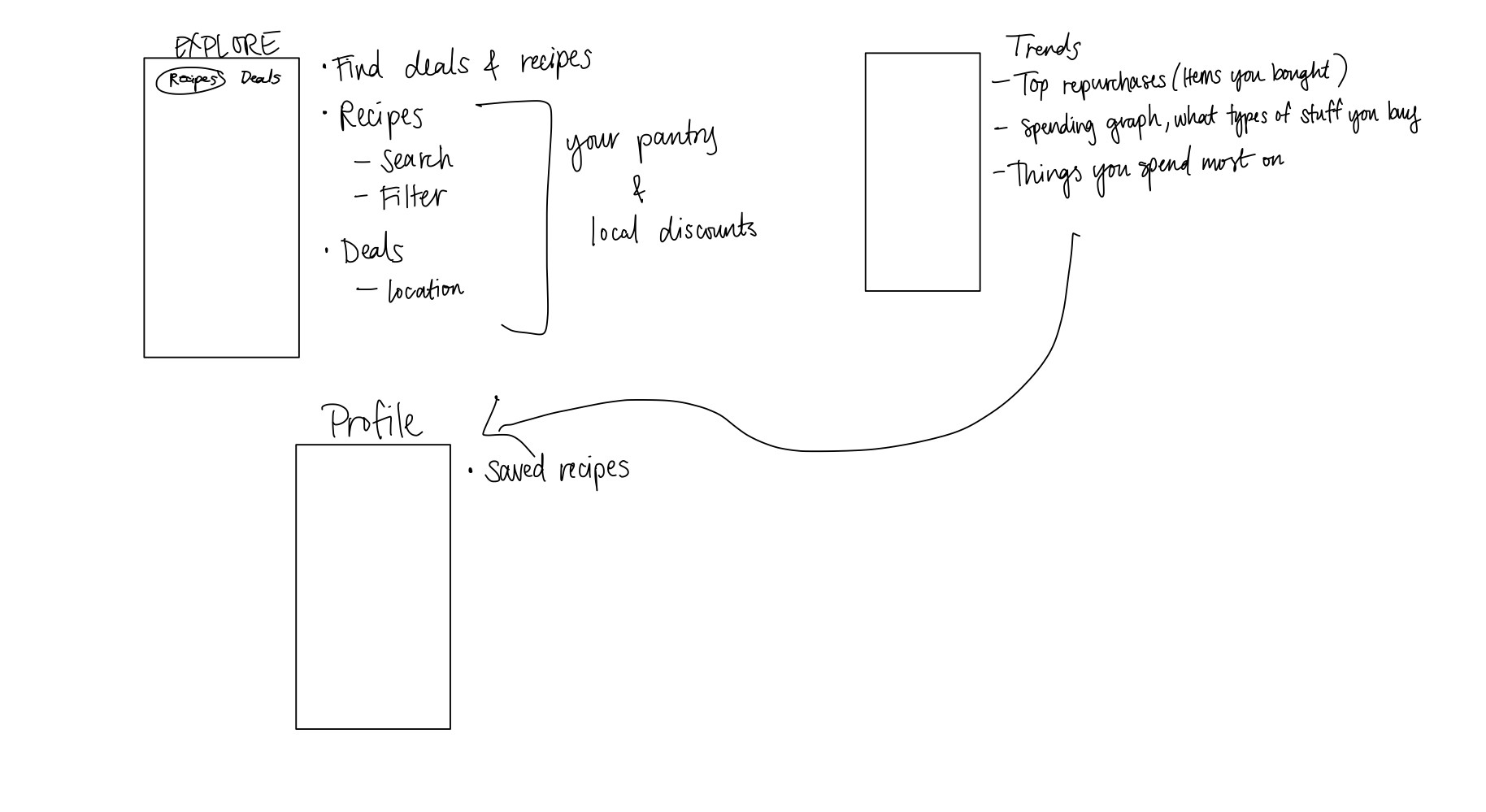
After compiling all of our findings, it took us a long time to figure out how to develop a solution that would embody all the issues we wanted to tackle with food inaccessibility for college students. We went back to the sketchpad, mapped out user flows, drew out a ton of screens, asked for the opinions of some more random students that passed by as we iterated on our sketches and landed on our initial wireframes.
After compiling all of our findings, it took us a long time to figure out how to develop a solution that would embody all the issues we wanted to tackle with food inaccessibility for college students. We went back to the sketchpad, mapped out user flows, drew out a ton of screens, asked for the opinions of some more random students that passed by as we iterated on our sketches and landed on our initial wireframes.

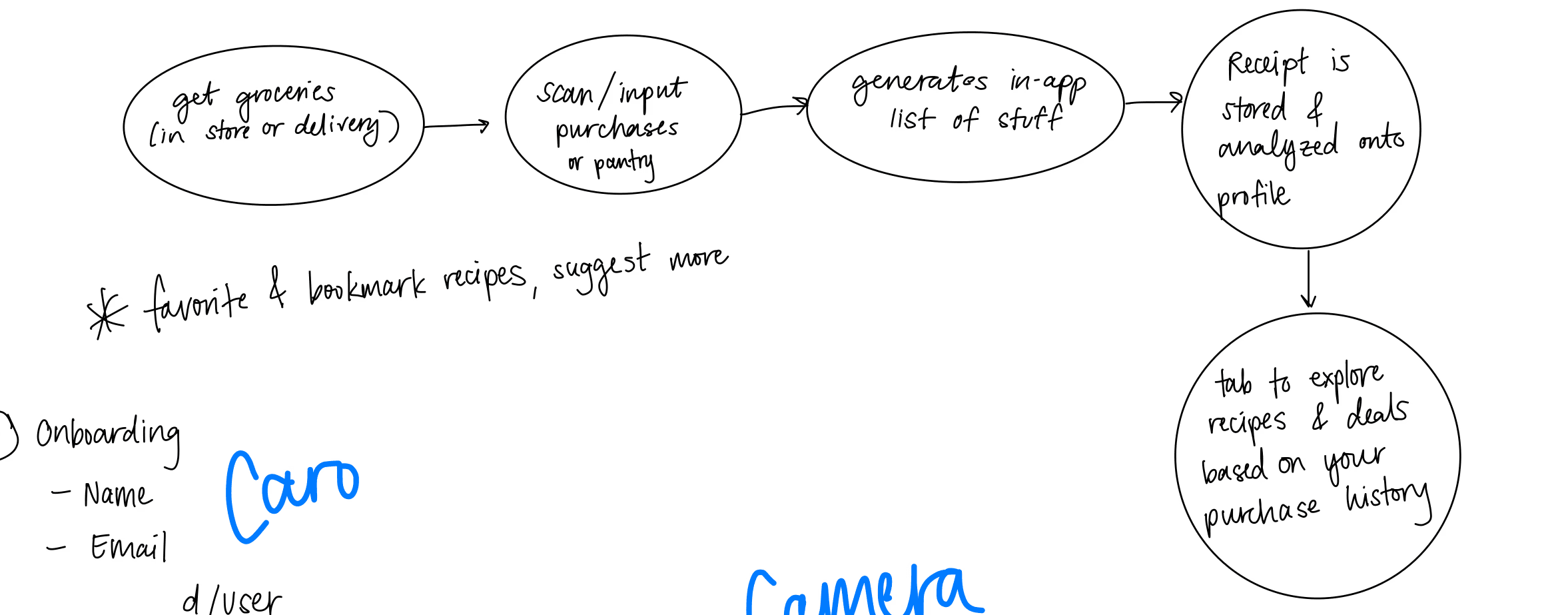
USER JOURNEY FLOW CHART
INITIAL WIREFRAME SKETCH
USER JOURNEY FLOW CHART
INITIAL WIREFRAME SKETCH
FIRST ITERATION WIREFRAMES
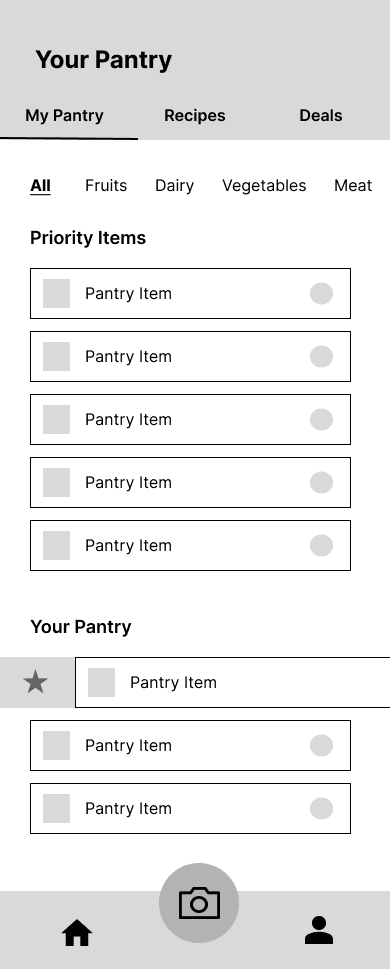
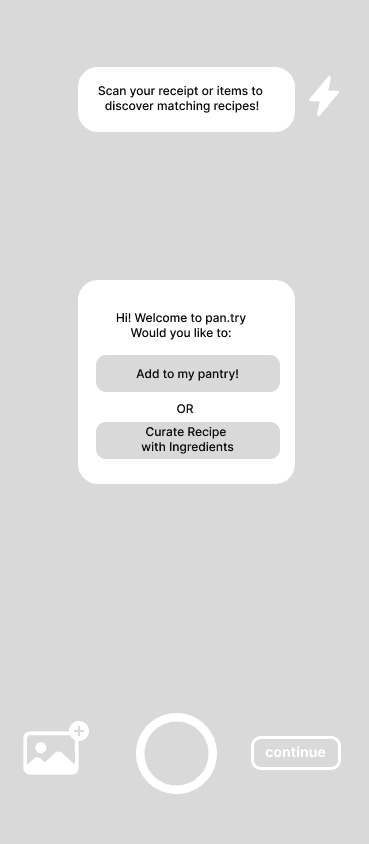
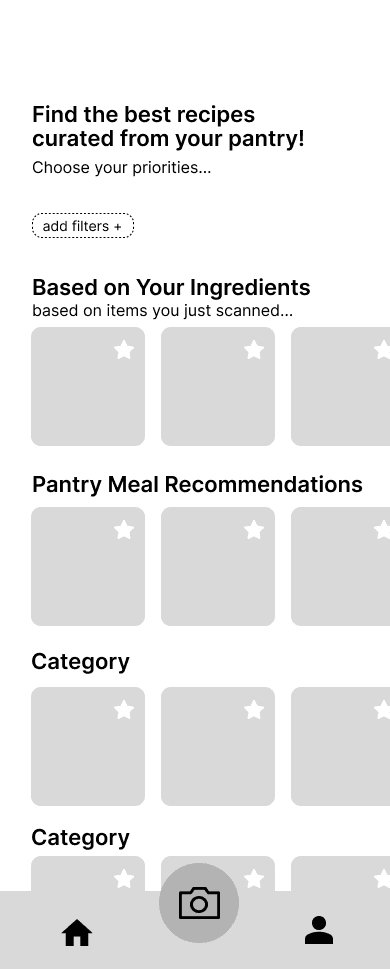
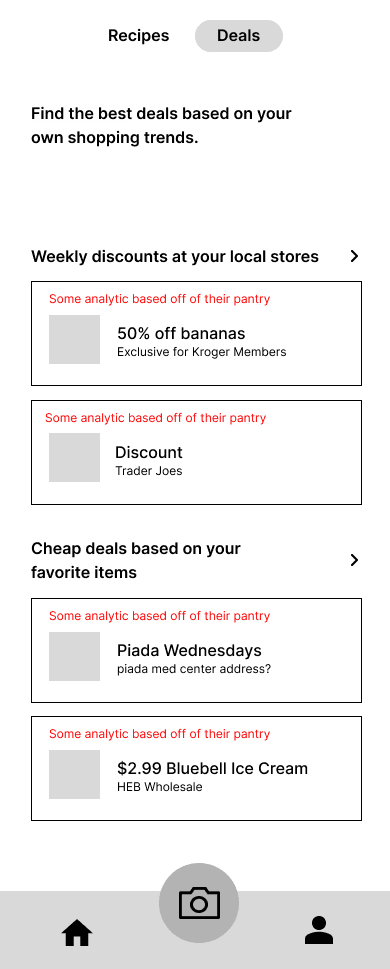
We created wireframes on Figma and then tested them with more passing by students to get their input on features they found useful or wanted to prioritize. From these initial wireframes, we finalized our screens and developed the high fidelity MVP of our project for submission.
We created wireframes on Figma and then tested them with more passing by students to get their input on features they found useful or wanted to prioritize. From these initial wireframes, we finalized our screens and developed the high fidelity MVP of our project for submission.


Final MVP + Design System
Final MVP + Design System
There are 4 primary functions of Pan.try that address the themes we identified in our user research. In this section, I’ll walk through how each of the themes are prioritized as the user journey progresses through each screen of the app.
There are 4 primary functions of Pan.try that address the themes we identified in our user research. In this section, I’ll walk through how each of the themes are prioritized as the user journey progresses through each screen of the app.
Dashboard
Filter through your pantry and generate recipes out of ingredients that users already have
Quick access to recipes personalized to preference and available ingredients
Recipes tell the user what they already have, need to get & optional ingredients
AI scan feature quickly updates pantry and reduces time spent looking for & figuring out what to cook
Deals for groceries based on user activity helps users budget + plan grocery trips
TIME
Filter through your pantry and generate recipes out of ingredients that users already have
Filter through your pantry and generate recipes out of ingredients that users already have
PRICE
Ingredient tracking reduces food waste and trips to the grocery store to replace accidentally spoiled or forgotten food
Ingredient tracking reduces food waste and trips to the grocery store to replace accidentally spoiled or forgotten food
Quick access to recipes personalized to preference and available ingredients
Quick access to recipes personalized to preference and available ingredients
TIME
KNOWLEDGE
Recipes tell the user what they already have, need to get & optional ingredients
ACCESS
KNOWLEDGE
PRICE
ACCESS
Deals for groceries based on user activity helps users budget + plan grocery trips
Deals for groceries based on user activity helps users budget + plan grocery trips
Camera
AI scan feature quickly updates pantry and reduces time spent looking for & figuring out what to cook
AI scan feature quickly updates pantry and reduces time spent looking for & figuring out what to cook
TIME
KNOWLEDGE
Design System
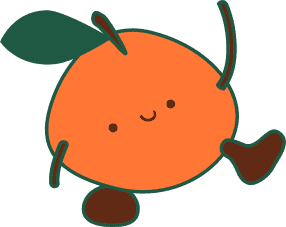
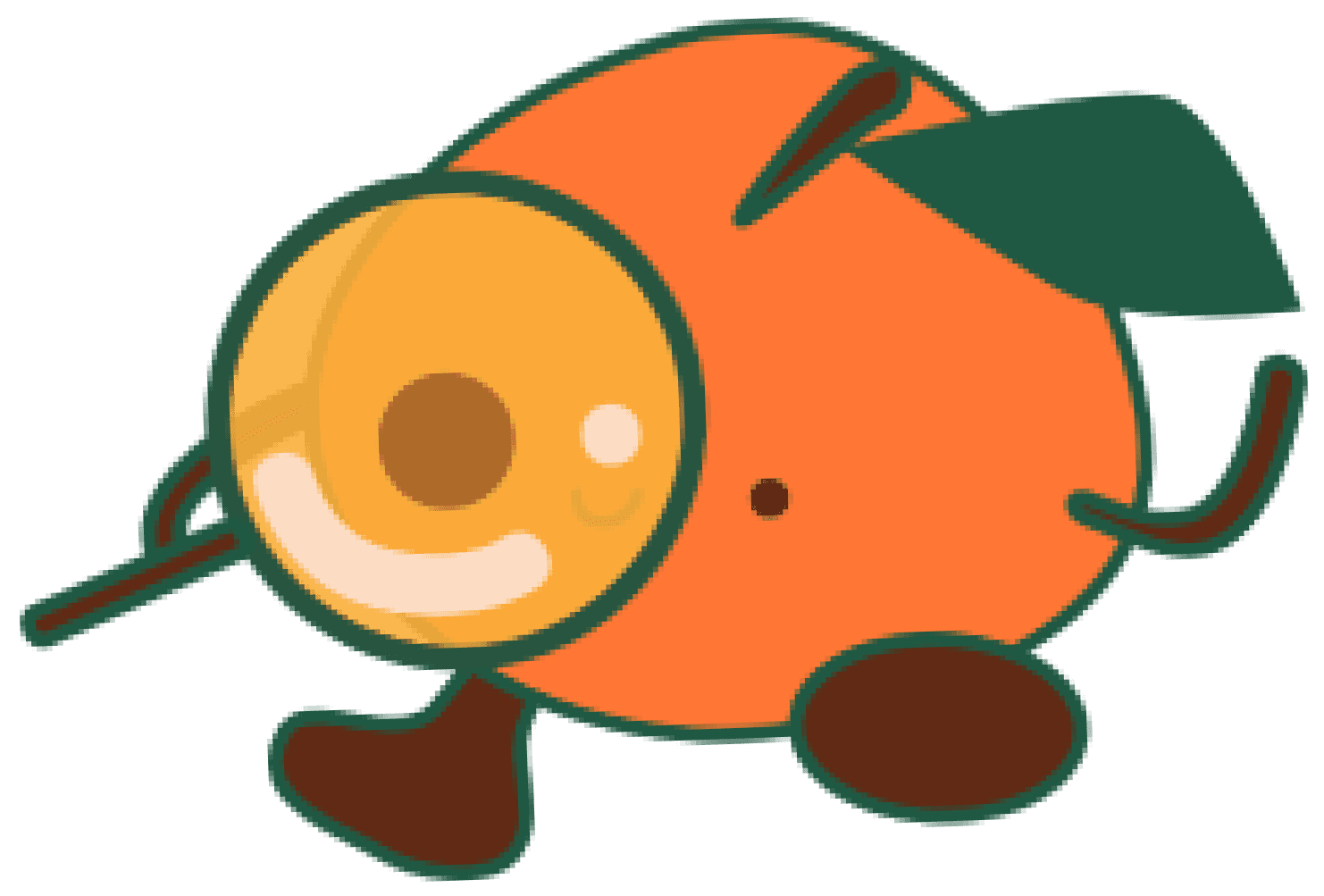
I’m Clemmy - Pan.try’s mascot & your friendly chef pal! I aim to make cooking feel friendly for everyone!
I’m Clemmy - Pan.try’s mascot & your friendly chef pal! I aim to make cooking feel friendly for everyone!
Color Accessibility
Color Accessibility
Color palette checked by multiple colorblindness tests
Color palette checked by multiple colorblindness tests
Font
Font
Sans serif font chosen for readability & distinct serif font chosen for branding
Sans serif font chosen for readability & distinct serif font chosen for branding
Fonts
FONTS
Work Sans
Honeypirls
Typography
TYPOGRAPHY
Typography
Branding 28px
Branding (28px)
H1 Semibold 28px
Header 1 (28px)
H1 Semibold 28px
H2 Semibold 22px
Header 2 (22px)
H3 Semibold 18px
Header 3 (18px)
Regular body text 16 px
Body text (16px)
Most Inclusive Design
Most Inclusive Design
Pan.try won the award for most inclusive design at the Rice 2024 Design-a-thon for its application of accessible design techniques and mission of enhancing access to nutrition.
Pan.try won the award for most inclusive design at the Rice 2024 Design-a-thon for its application of accessible design techniques and mission of enhancing access to nutrition.
NEXT STEPS
Pan.try placed 4th out of the 50+ other teams participating in the Rice Design-a-thon 2024 and was awarded “Most Inclusive Design."
But this isn’t the end! Our team felt so passionately about Pan.try & the problem space that we pitched it at the Napier Rice Launch Competition. As an early stage idea, Pan.try didn’t make it far. However, we’re currently in the process of furthering the idea with some developer friends + couldn’t be more excited to see what happens next! On the design side, here are some next steps for Pan.try:
Pan.try placed 4th out of the 50+ other teams participating in the Rice Design-a-thon 2024 and was awarded “Most Inclusive Design."
But this isn’t the end! Our team felt so passionately about Pan.try & the problem space that we pitched it at the Napier Rice Launch Competition. As an early stage idea, Pan.try didn’t make it far. However, we’re currently in the process of furthering the idea with some developer friends + couldn’t be more excited to see what happens next! On the design side, here are some next steps for Pan.try:
DEVELOPMENT
We are working with other student developers to create a functional MVP.
We are working with other student developers to create a functional MVP.
USABILITY
We plan on conducting usability tests with our design files and revising based on student need.
We plan on conducting usability tests with our design files and revising based on student need.
MARKET RESEARCH
After developing an MVP, we plan on launching an early stage version of our product to gauge market interest.
After developing an MVP, we plan on launching an early stage version of our product to gauge market interest.
Final Thoughts
Final Thoughts
KEY TAKEAWAYS
KEY TAKEAWAYS
Creating Pan.try in less than 3 days taught me a lot about what to prioritize when you're designing quickly. However, my journey with validating our product with users after design, pitching it and revisiting it made me realize even more things about what my design non-negotiables are.
Creating Pan.try in less than 3 days taught me a lot about what to prioritize when you're designing quickly. However, my journey with validating our product with users after design, pitching it and revisiting it made me realize even more things about what my design non-negotiables are.
ACCESSIBILITY STARTS FROM THE ROOT
In the past, I've always retroactively worked to make my designs more accessible after finishing everything. However, being faced with the goal of building an inclusive and accessible product within 3 days led me to realize that true accessibility for your users starts from ideating and wireframing — before you even begin putting anything into Figma.
YOU NEVER KNOW A USER'S STORY
As college students, we went into Pan.try believing that we had a good idea of who our target audience was. However, we discovered vastly different narratives that guided our design ideation sessions to what Pan.try is now.
EVERY DESIGN CHOICE CARRIES MEANING
When you're designing quickly, you don't have time to think through every single click and button your user is making. When I went back to the product after the design-a-thon, I found myself redesigning very minor changes (e.g. hover effects, colors, width of buttons) to make our design more intuitive and friendly for all kinds of users. I hadn't realized what a big difference these seemingly small details made in a user's experience until they were gone.
ACCESSIBILITY STARTS FROM THE ROOT
In the past, I've always retroactively worked to make my designs more accessible after finishing everything. However, being faced with the goal of building an inclusive and accessible product within 3 days led me to realize that true accessibility for your users starts from ideating and wireframing — before you even begin putting anything into Figma.
SOME USERS MAY BE DIFFERENT THAN THEY APPEAR…
As college students, we went into Pan.try believing that we had a good idea of who our target audience was. However, we discovered vastly different narratives that led us to completely reinventing
EVERY INTERACTION HAS A MEANING
When you're designing quickly, you don't have time to think through every single click and button your user is making. When I went back to the product after the design-a-thon, I found myself redesigning very minor changes (e.g. hover effects, colors, width of buttons) to make our design more intuitive and friendly for all kinds of users. I hadn't realized what a big difference these seemingly small details made in a user's experience until they were gone.
See the final project outputs